
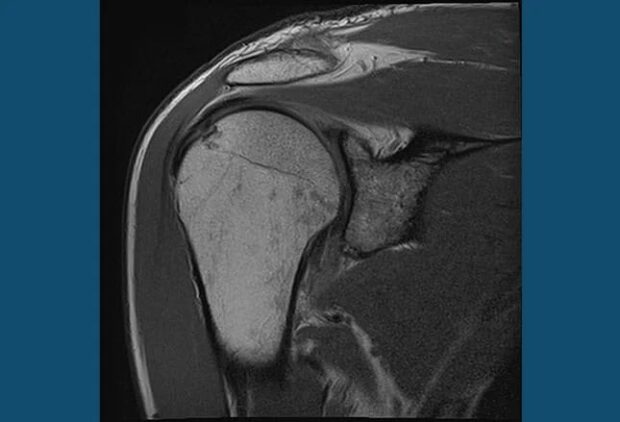
Medscape Clinical Essentials recently published an article called “Thawing a Frozen Shoulder,” covering everything from surgery to physiotherapy. Acupuncture and dry needling weren’t mentioned once. Acupuncture Canada faculty member Irene Biemann, PT, CAFCI, addresses that gap.
Physiotherapists and chiropractors trained in acupuncture have a real advantage here. They can combine passive stretching, active exercise, and manual therapy with acupuncture techniques that reduce pain, lower inflammation, rebalance the autonomic nervous system, and restore function.
For patients dealing with frozen shoulder, that combination can make a significant difference in both pain relief and recovery. Below, Irene outlines several acupuncture frameworks for treating frozen shoulder (adhesive capsulitis), including Complex Regional Pain Syndrome (formerly known as Reflex Sympathetic Dystrophy or Shoulder-Hand Syndrome).
Starting point: the “mad dog” phase
Students of Acupuncture Canada will recognize the acute phase of frozen shoulder as a “mad dog” presentation, a concept originally taught by Dr. Joseph Wong. It describes a state of sympathetic dysregulation: severe pain, significant inflammation, and a nervous system that is not ready for local needling. Inserting needles near the shoulder at this stage risks making things worse.
Treatment starts distally, away from the shoulder entirely.
Approach 1: Autonomic rebalance
As originally devised by Dr. Wong, sympathetic switches can be used to lower sympathetic tone and begin to relieve pain. Start with GV26, using gentle stimulation. Pain signals should begin to recede within minutes. LI4, LR3, and ST36 are also strong acupuncture points that can support this effect.
Approach 2: Anatomical acupuncture
The shoulder is covered by three channels: the Large Intestine (LI / Hand Yang Ming), Small Intestine (SI / Hand Tai Yang), and Triple Energizer (TE / Hand Shao Yang). Distal acupuncture points on these meridians, such as SI3, SI6, TE3, LI4, and LI10, are the natural starting point for this kind of physiotherapy treatment.
As pain severity decreases, consider points relevant to the shoulder’s nerve supply:
- C5 nerve root: Cervical Spinal Nerve Point C5
- Brachial plexus: LU2, HT1
- Circumflex nerve: SI9, LI15, TE14
ST38 is also worth considering as a reliable empirical distal point for shoulder pain.
As the patient progresses, apply the one-needle-at-a-time technique to anatomically relevant points. Insert a fine needle with gentle stimulation for about a minute, remove it, and assess the response. The same point can be treated multiple times this way, with a cumulative effect and minimal discomfort.
Approach 3: Xi-Cleft points
Xi-Cleft points sit distally on all regular meridians and are considered sites where Qi and Blood converge. In classical acupuncture theory, pain comes from a blockage of Qi and Blood, which makes Xi-Cleft points well-suited for severe or chronic pain.
For the shoulder, the relevant points are LI7, SI6, and TE7, chosen based on where the pain sits. Gentle active range-of-motion exercises can be done during the acupuncture session with the needles in place.
A clinical example: A patient came in with sudden-onset shoulder pain and no mechanical cause. Irene used only these three acupuncture points in a single treatment. The pain resolved completely.
Approach 4: Tendino-Muscular Meridians (TMMs)
TMMs are the superficial layer of the meridian system, covering the skin, muscles, tendons, joints, and fascia. They show up in most musculoskeletal conditions, including muscle tension, muscle pain, and acute injury, and they are especially useful for severe pain and acute flare-ups of chronic pain.
Treatment follows the affected meridian. For pain over the anterior shoulder, that’s the LI meridian. The formula uses the Jing-Well point, Tonification point, and the crossing point (same polarity/limb meridians cross on either the head or trunk). For the LI meridian:
- LI1 (Jing-Well)
- LI11 (Tonification)
- GB13 or ST8 (crossing point, depending on reference)
Keep the needling superficial, as these meridians sit close to the surface. Pain relief is typically fast, often within minutes. A small number of additional points on the affected meridian (2 to 3 at most) can be added as tolerated. LI10 is a strong addition for its relevance to Blood and Qi.
Approach 5: Chinese scalp acupuncture
Developed in the 1950s, Chinese scalp acupuncture maps functional areas of the brain onto the scalp. Rather than discrete points, lines are used: acupuncture needles are inserted tangentially along the relevant line for 30 to 40 mm, depending on location. Each line overlies a specific area of the cortex.
For shoulder pain and mobility, the two most relevant lines are:
- Sensory Area (overlying the primary sensory cortex)
- Motor Area (overlying the primary motor cortex)
Point location within these lines follows the homunculus. Needles go in on the side opposite the affected shoulder, then are manually stimulated. In Irene’s experience, changes in pain sensitivity and movement can occur almost immediately. Exercises can be done easily with scalp needles in place, supporting recovery and function.
Approach 6: Yuan Qi acupuncture
This ancient system was developed by Dr. Hua Tuo (who also developed the Huatuojiaji points) and passed down through various teachers. Irene learned it from Dr. Suzanne Robidoux.
Yuan Qi acupuncture works energetically, working with Yuan Qi as it moves through the body. Point selection is based on the location of pain mapped to Five Elements theory (not the Five Shu Points). The needle goes in on the opposite extremity, on the paired yin/yang meridian.
For example: the shoulder falls in the “wood element.” If pain and discomfort sit in the LI Hand Yang Ming channel, the Wood point on the paired LR Foot Jueyin channel is needled to unblock the circuit and re-establish circulation of Qi and Blood. The needling technique can be uncomfortable, but it works quickly when point selection is accurate.
What about dry needling?
Dry needling is a local physiotherapy technique that works well for releasing muscle tension and improving function and mobility. The caveat: because it targets tissue directly, it requires caution in the acute phase. Needling too early risks provoking more discomfort rather than providing relief.
Building the right treatment plan
There is no single correct approach to frozen shoulder. There are many, and most patients benefit from a combination tailored to where they are in their recovery.
Irene typically starts with Chinese scalp acupuncture, given her results with it, paired with GV26 if pain is severe. Passive, assisted, and active movement increase as the patient tolerates more during each acupuncture session. If one meridian is more affected than others, she adds TMMs for that channel.
The more techniques a practitioner has available, the better they can match the approach to the individual. That’s what makes acupuncture physiotherapy effective: not a fixed protocol, but a clinical decision made fresh for each patient.
